




![IM608 PRO II Full Kit<br>[2-Year Free Update]](http://www.obdprice.com/cdn/shop/files/Autel_IM608S_II_Full_Kit_1_600x600.webp?v=1755662636)

![IM508S PRO<br>[2-Year Free Update]](http://www.obdprice.com/cdn/shop/files/Autel_MaxiIM_IM508S_Pro_600x600.webp?v=1755662755)
![IM508S<br>[2-Year Free Update]](http://www.obdprice.com/cdn/shop/files/AUTEL_MAXIIM_IM508S_600x600.webp?v=1755662895)









A cooling fan refuses to run. Your code reader shows a cooling-system fault, but that still leaves several suspects: the motor, its power supply, the control circuit, or the conditions that trigger fan operation. Buying a fan at this point is a guess.
A bidirectional scan tool gives you another move: ask the vehicle's control module to turn the fan on while you watch what happens. That ability to request an action makes active testing useful for everyday diagnosis, especially when a trouble code tells you where to investigate without identifying the failed part.
Here are the tests worth understanding, what their results actually tell you, and where Autel scanners fit into the job.

What changes when your scanner can send commands?
A basic reader retrieves codes and operating data. A bidirectional scanner can also request supported actions from a control module, such as switching a relay, moving a valve, or disabling an injector during a diagnostic routine. Manufacturers may call these active tests, actuator tests, or output controls.
The scanner does not directly power the component. The vehicle's module receives the request and decides whether the operating conditions allow it. That distinction matters when a test is unavailable or refuses to start.
For more background, this explanation of bidirectional control basics covers the communication involved. In practice, the useful question is simple: when you request a change, does the physical response match?
Cooling fans: test the response before the engine gets hot
Fan control is one of the easiest active tests to appreciate. Instead of waiting for coolant temperature to climb, you can request fan operation under the conditions specified by the vehicle. Some applications offer separate low- and high-speed commands; others use a percentage request.
If the fan runs, you have evidence that it can operate through the commanded circuit at that moment. Next, investigate why normal operation differs: temperature input, air-conditioning requests, control logic, or an intermittent connection may deserve attention.
If it stays still, the motor is not automatically guilty. Check whether the module accepted the command, then follow the wiring diagram to test power, ground, fuses, relays, or the fan controller. A displayed “ON” command is not proof that voltage reached the motor.
Keep hands, clothing, and test leads clear before starting. Fans can begin moving immediately. Also test each supported speed: a fan that works on high may still have a fault affecting low-speed operation.
EVAP valves: a click is only the beginning
EVAP problems show why active tests work best alongside measurements. A purge valve can click without sealing correctly, and a vent valve can respond electrically while a leak remains elsewhere.
In a Mustang owner's discussion, the owner reported that P0496 returned after an OEM purge-valve replacement. They also described smoke testing and uncertainty about purge behavior at startup. The post does not establish a final repair, but it illustrates a familiar problem: replacing the commonly blamed part has not answered the diagnostic question.
Where supported, command the purge valve through its prescribed test and compare the request with vacuum, flow, or fuel-tank pressure response. For leak testing, a supported vent-close command can help seal the system before an appropriate EVAP smoke test.
Do not assume that “0%” always means the same thing across vehicles or test screens. Follow the service description, and use EVAP-rated equipment at the specified pressure. Your goal is to establish whether the valve opens, whether it seals, and whether the system responds—not merely whether something clicks.

EGR valves: movement and exhaust flow are different checks
An EGR-related code can point toward a sticking valve, restricted passages, a circuit fault, or unreliable feedback. An active test helps separate those possibilities by letting you compare commanded position with reported position and engine response.
On some gasoline engines, opening the EGR valve during a permitted idle test causes rough running or a noticeable speed change. That response can support the conclusion that exhaust gas is reaching the intake. Diesel strategies and other EGR designs behave differently, so there is no universal idle-response rule.
If reported position follows the command but the expected flow response is missing, restricted passages or misleading feedback remain possibilities. If position does not follow, investigate the valve and its circuit before ordering parts.
This Autel EGR test guide shows a typical menu path and includes a Honda Accord video example. Use your vehicle's service specifications for expected behavior and timing rather than applying one threshold to every engine.
Injector cutout: find the weak cylinder, then find the cause
A supported cylinder cutout test disables injection to individual cylinders while you compare their contribution. A healthy cylinder usually produces a noticeable change when disabled. A cylinder already contributing little may cause a smaller change.
That makes the test useful when an engine runs unevenly but the fault is not obvious from a single code. Compare the results with misfire counters and other operating data under consistent conditions.
However, a weak contribution does not prove a bad injector. Ignition trouble, low compression, an intake leak, or a mechanical problem can produce a similar result. The test identifies where to investigate next.
Injector balance testing is a different procedure. Where supported, it compares fuel-pressure changes after controlled injector pulses. Follow the exact service routine; repeatedly triggering injectors outside that routine can introduce excess fuel. A scanner listing injector coding also does not guarantee either of these diagnostic tests.
Fuel pumps and cabin actuators: useful checks beyond engine codes
For a crank-no-start complaint, a supported fuel-pump command can make pressure and electrical testing easier. You can request operation while checking the specified pressure or measuring the circuit, rather than relying only on a brief key-on prime.
Hearing the pump is useful, but pressure and delivery still matter. A running pump can fail to provide what the engine needs. Likewise, silence does not distinguish a failed pump from missing power or an unaccepted command.
Inside the cabin, HVAC door tests can help investigate one side blowing warm or repeated clicking behind the dashboard. Request different positions and compare actuator feedback, accessible movement, and outlet-air behavior.
Supported body-module tests may also operate locks, windows, or the horn. If an output responds to the scanner but not its normal switch, that narrows the investigation toward the input and control path. It does not, by itself, prove the switch is faulty.

ABS bleeding and parking-brake service need their own routines
Some useful bidirectional functions are guided service procedures rather than simple on/off tests. Automated ABS bleeding can cycle supported hydraulic components as part of the manufacturer's bleeding sequence. Electronic parking-brake service mode can prepare supported rear brakes for pad replacement.
These functions are not interchangeable with manually activating a pump or motor. Select the correct routine, follow its prompts, and complete the required mechanical steps. An ABS bleed function does not repair a hydraulic leak or replace the rest of the prescribed bleeding process.
Which scan tool fits the tests you actually need?
Start with the job you want to do. If you're chasing an EVAP fault, confirm that the scanner can command the relevant purge and vent valves on your vehicle. A long feature list means little if the specific test you need is missing.
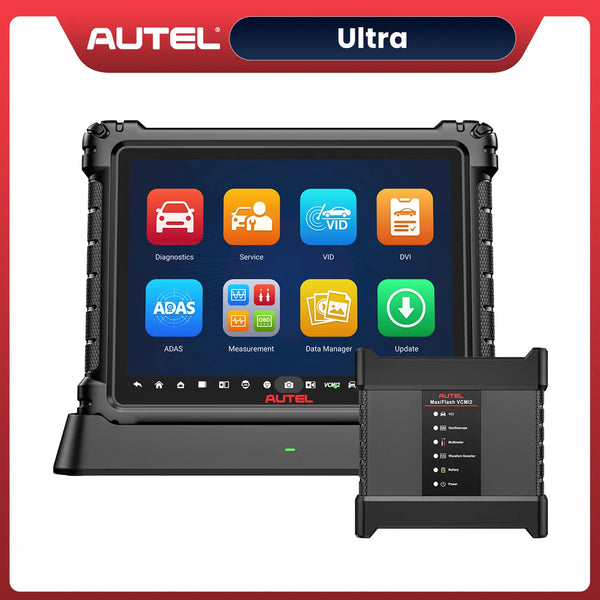
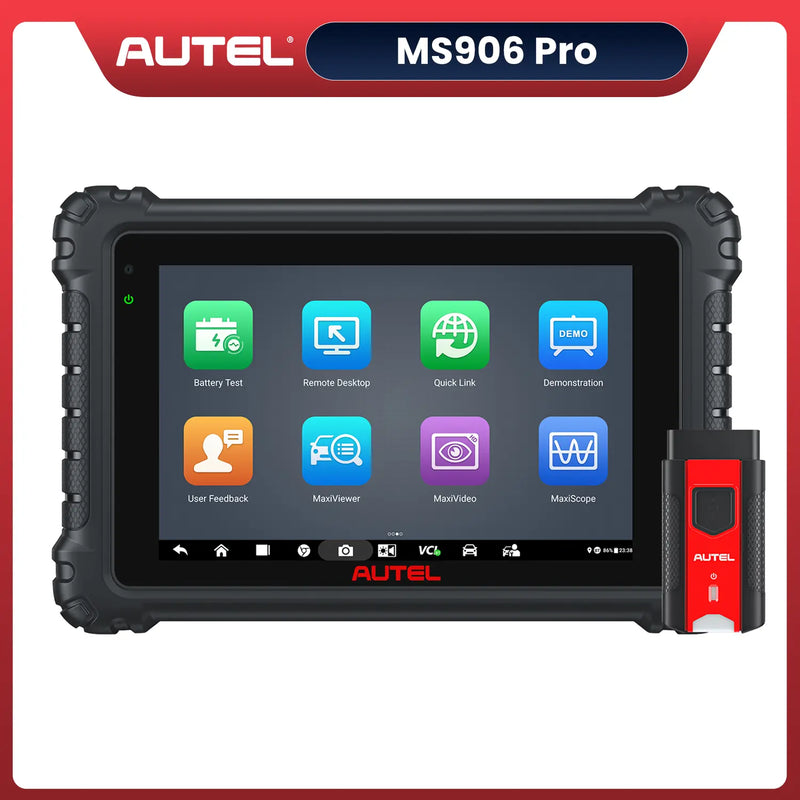
Among Autel scanners, the MaxiCOM MK808S, MaxiPRO MP808BT Pro, and MaxiSYS MS906 Pro are models worth comparing for active-test capability. The right Autel scan tool depends on your vehicle coverage, the service functions you use, and whether a wireless connection would make testing easier around the car.
 $440 OFF
Autel MaxiSys MS906 Pro
$1499.00
2026 Autel Professional Diagnostic Scanner with Advanced ECU Coding, Bi-Directional Control & DoIP/CAN FD Support
Before buying, ask for confirmation using your vehicle's year, model, engine, and the exact function required. “Supports Ford” is much less useful than confirmation that the tool can close the EVAP vent valve on your particular Ford. Check software-update costs and any security-gateway access requirements as well.
To compare options across different budgets, see this bidirectional scanner buying guide. It includes the Autel MP808BT Pro alongside alternatives from other brands. Use it to build a shortlist, then verify vehicle-specific test coverage before making your choice.
Make every command answer a question
Before opening the active-test menu, save the codes and freeze-frame data, confirm the complaint, and decide what result would support your suspicion. Identify the correct vehicle and module, maintain the required battery voltage, and meet the routine's temperature, ignition, and transmission-position requirements.
Then compare three things: what you requested, what the scanner reports, and what the component actually does. If they disagree, that disagreement is often the most useful finding of the test.
After repair, repeat the relevant check and confirm that normal operation has returned. A bidirectional scan tool earns its place when it helps you make a better repair decision: fewer assumptions, a clearer next measurement, and stronger evidence before replacing a part.


Leave a comment