


















Introduction
Spark plugs are a key component of a gasoline engine’s ignition system; they are responsible for igniting the combustible mixture inside the cylinder, thereby driving the piston to perform work and power the engine. When they become worn, carbon-fouled, or damaged, they can result in insufficient ignition energy or misfires, which in turn can cause problems with engine operation and starting.
When a spark plug is faulty, common symptoms include difficulty starting the engine, misfires, rough idling, lack of power during acceleration, and increased fuel consumption. Of course, these symptoms alone are not enough to conclusively determine that a spark plug is faulty, as they may also be caused by problems with the ignition coil, fuel system, intake system, or mechanical issues with the engine.
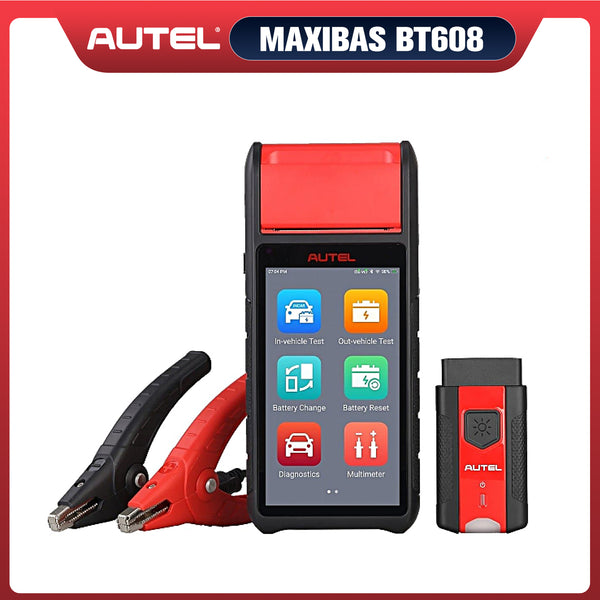
If you want to determine whether the problem is actually with the spark plugs, you’ll need to use an automotive diagnostic tool for further inspection and diagnosis. The Autel OBD2 scanner can help with this process. This guide will provide a detailed explanation of the symptoms, causes, and how to use the scanner to perform the inspection.

Quick Answer: What Are the Signs of Bad Spark Plugs?
- Check Engine Light Comes On
- Difficulty Starting Your Car
- Decreased Fuel Efficiency
- Rough Engine Idle
- Decreased Fuel Efficiency
- Engine Misfires
- Poor Acceleration
Note: The presence of any one of the above symptoms does not necessarily indicate that the spark plug is faulty; further inspection is required.
Signs of Bad Spark Plugs
1. Rough Idling or Engine Vibration
When spark plugs become carbon-fouled, worn, or damaged, the spark becomes weak or unstable. When the engine is idling, some cylinders may not ignite properly, resulting in uneven power output, which can cause engine instability and vibration.
However, rough idling isn’t necessarily caused by the spark plugs. Ignition coils, fuel injectors, intake leaks, or mechanical engine issues can also produce similar symptoms. You need to determine whether the rough idling appeared suddenly or developed gradually; the most accurate way to diagnose the problem is to use an Autel OBD2 scanner to read the trouble codes and check for a “misfire in a specific cylinder” record.
2. Engine Misfires, Hesitation, or Jerking
During acceleration, the engine must continuously ignite the fuel-air mixture in the cylinders under higher loads. If the spark plug electrodes are worn, fouled, or have an improper gap, ignition may become unstable, causing a particular combustion cycle to weaken or fail. When the engine control system detects this combustion anomaly, it may record it as a misfire.
Drivers typically do not experience continuous idling vibrations, but rather a delayed response when pressing the accelerator, a brief hesitation during acceleration, or a sudden interruption and subsequent resumption of power delivery.
Worn or fouled spark plugs can interrupt combustion and cause an engine to misfire, hesitate, or jerk during acceleration. These symptoms can also come from ignition, fuel, or air-intake problems. For more troubleshooting steps, see our guide to fixing engine misfires and rough idle.
3. Hard Starting or Longer Cranking
During startup, the fuel-air mixture is rich, the temperature is low, and the starter motor drains the battery voltage—these three factors already make ignition conditions very challenging. A damaged spark plug further reduces ignition energy, lowering the success rate of the first ignition attempt.
As a result, the engine can only rely on extending the starter motor’s runtime to “take a chance” at firing, which manifests as difficulty starting or an increased startup time.
4. Reduced Acceleration or Engine Performance
During acceleration, the fuel-air mixture is rich, cylinder pressure is high, and the demand for ignition is at its peak. A damaged spark plug cannot deliver sufficient ignition energy at this point → resulting in incomplete combustion or misfires → which leads to a drop in torque output. Combined with the delayed ignition caused by knock protection, this ultimately manifests as slower acceleration and reduced power.
 Slower Acceleration While Driving
5. Lower Fuel Economy
When spark plugs are worn or fouled, they may fail to ignite the fuel-air mixture in the cylinder consistently, resulting in incomplete combustion or intermittent misfires. Engine power may decrease, requiring the vehicle to use more power to move under the same driving conditions; as a result, the driver may press the accelerator harder, leading to increased fuel consumption.
6. Check Engine Light
If the spark plugs are firing erratically, the engine control module may detect misfires in one or more cylinders and illuminate the check engine light. A automotive diagnostic tool may read code P0300 (random or multiple cylinder misfires) or codes P0301–P0308 (specific cylinder misfires).
What Can Cause Spark Plug Problems?
- Normal wear and tear: As mileage increases, the center electrode and side electrodes are subject to electrical spark erosion and metal spalling. The electrode gap gradually widens. When the gap exceeds the design specifications, it can lead to reduced ignition energy or even misfires.
- Carbon Deposits or Fuel Contamination: If the engine is frequently used for short trips, idles at low speeds, or is left running for extended periods to warm up, the temperature inside the combustion chamber cannot reach the self-cleaning temperature, and free carbon particles produced by gasoline combustion will adhere to the spark plug tip, affecting spark formation.
- Engine Oil Contamination: If engine oil enters the combustion chamber and accumulates on the spark plugs, it may interfere with ignition. This can sometimes indicate other engine problems.
- Poor fuel quality or a rich fuel mixture: Long-term use of low-quality fuel or an overly rich fuel-air mixture can accelerate carbon buildup on spark plugs. Impurities in the fuel and manganese-based anti-knock additives form reddish-brown, conductive deposits on the surface of the insulator, causing high-voltage current to leak laterally and resulting in ignition failure.
- Engine Overheating: Excessively high temperatures can cause the spark plug’s center electrode to melt, the insulator to crack, and even the electrode metal to flake off. This phenomenon, commonly known as “thermal erosion,” can instantly destroy the spark plug.
- Improper installation: If the spark plug is installed too loosely, too tightly, or not in accordance with the maintenance manual, it may affect the spark plug's performance or even damage components.
How to Check Whether the Spark Plugs Are the Problem
Rough idle, hesitation, or poor acceleration can point to spark plug trouble, but other engine problems can cause similar symptoms.
1. Scan for Trouble Codes
Use a compatible OBD2 scan tool to read stored and pending codes. Save the codes and freeze-frame data before clearing anything.
- P0300 Code: Random or multiple-cylinder misfire
- P0301–P0308 Code: Misfire detected in the corresponding cylinder
These codes identify a misfire, not its cause. A faulty spark plug, ignition coil, injector, wiring, or another engine issue may be responsible.
2. Inspect the Spark Plugs
If you have the right tools and experience, check the plugs for wear, deposits, oil contamination, or damage. Confirm that their type and gap match the vehicle’s specifications. Otherwise, ask a qualified technician to inspect them.
3. Check Related Parts and Verify the Repair
If a misfire remains, the ignition coil, wiring, fuel system, or engine condition may need checking. After repairs, scan again to see whether the code or symptoms return. Don’t treat clearing a code as proof that the problem is fixed.
If the Check Engine Light is flashing or the engine is shaking severely, stop driving when safe and arrange an inspection.
When Should You Replace Spark Plugs?
During regular vehicle use, spark plugs should be replaced periodically based on the material’s service life (standard nickel alloy: approximately 20,000–30,000 kilometers; platinum: approximately 40,000–60,000 kilometers; iridium: approximately 80,000–100,000 kilometers).
In addition, if the vehicle exhibits any of the aforementioned symptoms of power loss or ignition problems, or if an inspection reveals excessive electrode gap, severe carbon buildup, or a cracked insulator, the spark plugs must be replaced promptly to ensure proper engine operation.
Conlusion
Worn or damaged spark plugs can cause rough idling, misfires, hard starting, sluggish acceleration, reduced fuel economy, or a Check Engine Light. These symptoms and codes such as P0300 do not confirm that a spark plug is the cause.
Use scan results as clues, check the plugs against your vehicle’s specifications, and inspect related components when needed. If the engine runs roughly or the Check Engine Light flashes, arrange a prompt inspection.


