




![IM608 PRO II Full Kit<br>[2-Year Free Update]](http://www.obdprice.com/cdn/shop/files/Autel_IM608S_II_Full_Kit_1_600x600.webp?v=1755662636)

![IM508S PRO<br>[2-Year Free Update]](http://www.obdprice.com/cdn/shop/files/Autel_MaxiIM_IM508S_Pro_600x600.webp?v=1755662755)
![IM508S<br>[2-Year Free Update]](http://www.obdprice.com/cdn/shop/files/AUTEL_MAXIIM_IM508S_600x600.webp?v=1755662895)









Featured Summary: Engine Misfire & Timing Codes
Engine misfire and timing codes such as P0300, P0303, P0335, P0340, P0325, and P0327 are often connected through ignition, sensor, and combustion problems. Common causes include faulty spark plugs, ignition coils, crankshaft or camshaft sensors, wiring issues, fuel delivery problems, and timing system failures. Accurate diagnosis requires checking live data, freeze-frame information, and sensor signals instead of replacing parts based only on trouble codes.
Modern automotive diagnostic tools have made it easier than ever for vehicle owners and technicians to identify engine problems. Professional scan tools can read diagnostic trouble codes (DTCs), display live data, analyze engine performance, and help pinpoint the root cause of complex issues instead of relying on guesswork.
A Check Engine Light can be frustrating, especially when a scan reveals multiple trouble codes at once. Among the most common are P0300, P0303, P0335, P0340, P0325, and P0327. While these codes appear to point to different components, they are often closely related because they all affect engine timing, combustion, or ignition control.
A random misfire may actually be caused by a failing crankshaft sensor. Likewise, a faulty camshaft sensor can disrupt ignition timing and trigger misfire codes. Knock sensor faults can force the engine control module (ECM) to retard ignition timing, leading to sluggish performance and poor fuel economy.
This guide explains how these six DTCs are connected, their common symptoms and causes, and the best diagnostic approach. If you need detailed repair procedures for a specific code, you can continue to the individual code guides available on OBDPRICE.

Why Engine Misfire and Timing Codes Are Connected
Modern engines rely on precise communication between several sensors. The ECM continuously monitors the crankshaft position, camshaft position, knock sensor signals, ignition timing, and fuel delivery to ensure smooth combustion.
When one of these systems fails, the problem often affects others.
For example:
- A failed crankshaft position sensor may cause inaccurate ignition timing, resulting in P0300.
- A stretched timing chain can trigger P0340 while also causing engine misfires.
- A faulty knock sensor may force the ECM to reduce ignition timing, making the engine feel underpowered.
- Poor combustion can generate multiple misfire codes, including P0303.
Rather than treating every code as a separate problem, technicians look for the root cause that links them together.
Overview of the Six Common DTCs
| Code | Description | Typical Cause |
| P0300 | Random/Multiple Cylinder Misfire | Ignition failure, fuel delivery, vacuum leak |
| P0303 | Cylinder 3 Misfire | Bad ignition coil, spark plug, injector, low compression |
| P0335 | Crankshaft Position Sensor Circuit | Failed CKP sensor, damaged wiring, reluctor wheel |
| P0340 | Camshaft Position Sensor Circuit | Faulty CMP sensor, timing chain wear, wiring issues |
| P0325 | Knock Sensor Circuit (Bank 1) | Defective knock sensor, wiring fault |
| P0327 | Knock Sensor Low Input | Low sensor voltage, loose connector, poor ground |
Although each code refers to a different component, they all influence when and how combustion occurs inside the engine.
Common Symptoms
Vehicles with one or more of these trouble codes often exhibit similar symptoms. The severity depends on the underlying problem and how long it has been present.
Typical symptoms include:
- Illuminated Check Engine Light
- Rough idle
- Engine hesitation
- Poor acceleration
- Loss of engine power
- Increased fuel consumption
- Hard starting
- Engine stalling
- Flashing Check Engine Light during severe misfires
A flashing Check Engine Light deserves immediate attention because continuous misfires can overheat and damage the catalytic converter.
If the vehicle stalls unexpectedly or refuses to restart, a crankshaft position sensor fault such as P0335 becomes much more likely.

Check Engine Light Is On
What Causes These Codes?
Ignition System Problems
Ignition-related faults remain the leading cause of engine misfires. Worn spark plugs require higher voltage to produce a spark, placing extra stress on ignition coils. Eventually the spark becomes weak or inconsistent, causing incomplete combustion.
Cylinder-specific misfires like P0303 frequently result from a defective ignition coil or worn spark plug.
Sensor Failures
Modern engines depend heavily on sensor accuracy.
A faulty crankshaft position sensor prevents the ECM from accurately determining engine speed and piston position.
A defective camshaft sensor disrupts sequential fuel injection and ignition timing.
Knock sensor failures prevent the ECM from properly adjusting ignition timing during combustion.
Because these sensors work together, one failed sensor may trigger several related DTCs.
Fuel Delivery Problems
Fuel injectors must deliver the correct amount of fuel at exactly the right time.
Common fuel-related causes include:
- Dirty injectors
- Low fuel pressure
- Weak fuel pump
- Clogged fuel filter
Lean air-fuel mixtures frequently create random misfires and hesitation during acceleration.

A dirty fuel injector can cause abnormal fuel delivery
Vacuum Leaks
Air entering the engine without being measured by the mass airflow sensor creates a lean mixture.
Common leak locations include:
- Intake manifold gasket
- PCV hoses
- Vacuum lines
- Brake booster hose
Vacuum leaks often produce rough idle and random misfire codes.
Mechanical Engine Problems
When ignition and fuel systems test normally, technicians investigate mechanical issues.
These include:
- Low compression
- Burned valves
- Timing chain stretch
- Timing belt failure
- Worn piston rings
Mechanical problems usually require compression or leak-down testing for confirmation.
Why Multiple Codes Appear Together
Suppose the crankshaft position sensor begins failing intermittently.
As its signal drops out, the ECM loses track of crankshaft speed. Ignition timing becomes inaccurate, combustion suffers, and random misfires begin occurring. The ECM stores P0335, followed shortly by P0300.
If combustion becomes unstable enough, abnormal engine vibration may also affect knock sensor readings, resulting in P0325 or P0327.

Multiple Codes Appear Together
Similarly, a stretched timing chain can alter the relationship between the crankshaft and camshaft. The ECM detects this synchronization error and stores P0340. Incorrect valve timing then contributes to poor combustion and additional misfire codes.
Understanding these relationships prevents unnecessary parts replacement.
How to Diagnose the Problem
Professional technicians rarely replace parts immediately after reading trouble codes. Instead, they follow a structured diagnostic process.
Step 1: Scan All Codes
Record stored, pending, and permanent DTCs.
Also save the freeze-frame data, which shows the engine conditions when the code first appeared.
Step 2: Perform a Visual Inspection
Inspect:
- Wiring harnesses
- Electrical connectors
- Sensor plugs
- Ground connections
- Vacuum hoses
Many sensor codes are ultimately caused by damaged wiring rather than failed sensors.
Step 3: Check the Ignition System
Inspect spark plugs for wear and fouling.
Swap ignition coils between cylinders.
If the misfire follows the coil, you've found the faulty component.

Check the Ignition System
Step 4: Verify Fuel Delivery
Measure fuel pressure.
Check injector operation.
Compare fuel trims using live scan tool data.
Step 5: Test Engine Timing
Monitor crankshaft and camshaft synchronization.
If values are outside specification, inspect the timing chain or timing belt before replacing sensors.
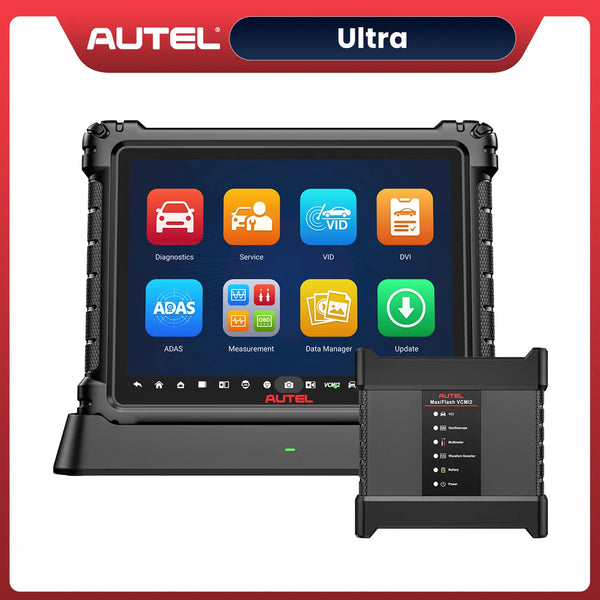
Using an Autel Scanner for Faster Diagnosis
A basic code reader only displays stored DTCs. A professional Autel scan tool provides much more information.
Advanced Autel scanners allow you to:
- View live sensor data
- Monitor cylinder misfire counters
- Read freeze-frame information
- Compare crankshaft and camshaft synchronization
- Graph sensor signals
- Perform active component tests
Instead of guessing which part has failed, you can observe exactly how the engine behaves under different operating conditions. This significantly reduces diagnostic time and prevents replacing good components unnecessarily.
Preventive Maintenance Tips
Many engine performance problems can be avoided through routine maintenance.
To reduce the risk of future misfire and timing codes:
- Replace spark plugs according to the manufacturer's schedule.
- Inspect ignition coils during tune-ups.
- Repair oil leaks that may contaminate electrical connectors.
- Check sensor wiring for heat or rodent damage.

Check Vehicle Wiring
- Replace clogged air filters regularly.
- Use high-quality fuel when recommended by the manufacturer.
- Address Check Engine Lights promptly instead of waiting for additional codes to appear.
Preventive maintenance is almost always less expensive than repairing major engine damage caused by prolonged misfires.
Conclusion
Although P0300, P0303, P0335, P0340, P0325, and P0327 appear to describe different problems, they are all connected through the engine's ignition and timing systems. A single failed sensor, damaged wiring harness, or worn timing component can trigger several of these codes at once.
The most effective diagnostic strategy is to identify the primary fault rather than replacing parts based solely on stored DTCs. By combining a systematic inspection with live data from a professional scan tool, technicians can quickly determine whether the issue lies in the ignition system, fuel delivery, engine timing, or sensor circuits.
If your vehicle displays one of these codes, use this guide as a starting point, then refer to the corresponding OBDPRICE article for detailed troubleshooting steps, repair procedures, and model-specific information.
Frequently Asked Questions
1. Can a bad crankshaft position sensor cause a misfire?
Yes. A failing crankshaft position sensor can disrupt ignition timing and cause random or intermittent misfires, often triggering P0300.
2. What's the difference between P0300 and P0303?
P0300 indicates random or multiple-cylinder misfires, while P0303 identifies a misfire specifically in cylinder 3.
3. Can I drive with a P0340 code?
The vehicle may still run, but prolonged driving is not recommended. A faulty camshaft position sensor can lead to hard starting, poor performance, and potential stalling.
4. What causes P0325 and P0327?
These codes are usually related to a faulty knock sensor, damaged wiring, poor electrical connections, or low sensor voltage.
5. Which scan tool is best for diagnosing these codes?
A professional diagnostic scanner, such as an Autel MaxiSys or MaxiCOM model, can display live data, freeze-frame information, and sensor synchronization, making it much easier to identify the root cause.


