





![IM608 PRO II Full Kit<br>[2-Year Free Update]](http://www.obdprice.com/cdn/shop/files/Autel_IM608S_II_Full_Kit_1_600x600.webp?v=1755662636)

![IM508S PRO<br>[2-Year Free Update]](http://www.obdprice.com/cdn/shop/files/Autel_MaxiIM_IM508S_Pro_600x600.webp?v=1755662755)
![IM508S<br>[2-Year Free Update]](http://www.obdprice.com/cdn/shop/files/AUTEL_MAXIIM_IM508S_600x600.webp?v=1755662895)









A P0174 code means the engine control module has detected a lean condition on Bank 2. In practical terms, the computer is adding more fuel than expected because the exhaust indicates too much oxygen. The cause may be unmetered air, insufficient fuel, inaccurate airflow data, an exhaust leak, or a sensor problem—but the code alone cannot tell you which one.
That distinction matters. Many P0174 repair stories shared in owner forums begin with someone replacing an oxygen sensor or mass airflow sensor, clearing the code, and watching the check engine light return. A better approach is to use an auto diagnostic scanner to study when the fault occurred and how the engine responds under different operating conditions.
The Autel MaxiSys MS906 Pro is well suited to this job because it provides freeze-frame data, graphable live data, recording, active tests, and manufacturer-level diagnostic coverage on many 1996-and-newer vehicles. Here is a practical way to use it without turning the repair into an expensive parts-swapping exercise.

What P0174 Does—and Does Not—Tell You
Bank 2 is the side of a V-type or horizontally opposed engine that does not contain cylinder number one. Its physical location varies by engine, so verify the cylinder layout in reliable service information before testing bank-specific components.
When the upstream oxygen or air-fuel-ratio sensor indicates a lean mixture, the powertrain control module increases injector delivery. This correction appears in scan data as positive short-term fuel trim, or STFT. If the correction continues, part of it is learned as long-term fuel trim, or LTFT. P0174 is stored when the required Bank 2 correction exceeds the manufacturer’s limit under the appropriate enabling conditions.
P0174 therefore describes the PCM’s response, not a failed part. A good oxygen sensor may simply be reporting a real air-fuel problem.
The companion codes provide an important clue. P0174 alone points toward something specific to Bank 2, such as:
- A Bank 2 intake-manifold gasket leak
- A cracked vacuum or PCV connection serving that bank
- A restricted Bank 2 injector
- An exhaust leak ahead of the Bank 2 upstream sensor
- A biased Bank 2 oxygen or air-fuel-ratio sensor
If P0171 and P0174 are stored together, concentrate on shared causes such as the intake duct, MAF sensor, PCV system, purge system, low fuel pressure, or a large vacuum leak. For a broader explanation of this distinction, see OBDPRICE’s guide to tracking down P0174 with an Autel scanner .
Step 1: Connect the MS906 Pro Without Clearing Anything
Connect the MaxiVCI V200 to the OBD-II port, switch the ignition on, and open Diagnostics on the tablet. Use AutoVIN if it identifies the vehicle correctly; otherwise, select the year, make, model, engine, and relevant options manually.
Run an Auto Scan rather than reading only generic OBD-II codes. Record all powertrain codes, including pending and history faults. Misfire, MAF, fuel-pressure, purge-flow, or oxygen-sensor codes may change the direction of the diagnosis.

Reading P0174 code on Autel
Open P0174 and save its freeze-frame data before clearing anything. Note:
- Engine speed
- Calculated load
- Coolant temperature
- Vehicle speed
- STFT and LTFT for both banks
- MAF airflow
- MAP reading, if available
- Fuel-system status
A code that set during warm idle is more consistent with a vacuum leak than one that set during hard acceleration. A fault appearing under load puts fuel volume, injector delivery, or airflow measurement higher on the list.
Step 2: Build a Focused Live-Data List
Start the engine and allow it to reach normal operating temperature. The system should be in closed loop before fuel-trim readings are interpreted.
On the Autel MS906 Pro, enter the engine control module and open Live Data. Select only the parameters needed for the test:
- STFT Bank 1 and Bank 2
- LTFT Bank 1 and Bank 2
- Upstream O2 or air-fuel sensor data
- MAF airflow
- MAP
- Engine speed
- Coolant temperature
- Commanded purge, when supported

Using Autel scanner live data fusion
Using fewer PIDs usually produces a cleaner, faster data stream. The MS906 Pro can display waveforms, record data, and merge two or three graphs, which is particularly useful for comparing Bank 1 and Bank 2.
Add STFT and LTFT mentally for each bank to estimate total correction. There is no universal pass/fail number, but a warm engine running normally will generally remain relatively close to zero. A total correction near +20% deserves investigation, while Bank 1 at approximately +3% and Bank 2 at +20% strongly suggests a Bank 2-specific problem.
Treat those figures as diagnostic examples, not specifications. Always consult service information for the vehicle being tested.
Step 3: Compare Idle with 2,500 RPM
Record both banks at warm idle. Then hold the engine near 2,500 RPM for about 20–30 seconds while watching or recording the same PIDs.
Suppose the readings look like this:
| Operating Condition | Bank 1 Total Trim | Bank 2 Total Trim |
|---|---|---|
| Warm idle | +4% | +24% |
| 2,500 RPM | +3% | +7% |
The sharp improvement on Bank 2 as airflow increases makes a vacuum or intake leak likely. At idle, a small leak represents a large percentage of the engine’s total airflow. At higher RPM, that same leak becomes a much smaller part of the total.
If Bank 2 remains near +24% at both speeds, look beyond a simple vacuum leak. A restricted injector, inaccurate MAF calculation, exhaust leak, or fuel-delivery problem becomes more plausible. If both banks grow increasingly positive under load, verify fuel pressure and volume rather than immediately replacing the MAF.
This idle-versus-RPM comparison is repeatedly recommended in technician videos and owner discussions because it turns a vague lean code into a testable direction.
Step 4: Test the Suspected System
When the data points to unmetered air, inspect the intake tube downstream of the MAF, PCV hoses, brake-booster hose, vacuum tees, throttle-body seal, purge plumbing, and Bank 2 intake-manifold area. Flex rubber elbows while inspecting them; splits often hide underneath.
A smoke test is safer and more dependable than spraying flammable cleaner around a running engine. Introduce low-pressure smoke into the sealed intake with the engine off and watch for smoke at hoses, gasket edges, and fittings. Do not feed shop air at unrestricted pressure into the intake.
A purge valve stuck partly open can also act like a vacuum leak. If the vehicle supports the function, use the MS906 Pro’s Active Test menu to command the purge solenoid while monitoring Bank 2 STFT. Available tests vary by make, model, and year. If scan-tool control is unavailable, isolate the purge line according to the manufacturer’s procedure and observe whether the trim drops.

Autel MS906 Pro Supports 3000+ Active Tests
If the smoke test is clean and the lean correction remains high at higher RPM, measure fuel pressure using the specified procedure. Compare the result with factory specifications at idle and under load. Direct-injection systems require the correct equipment and safety precautions; do not loosen high-pressure lines to “check for fuel.”
For a Bank 2-only fault, an injector balance or contribution test may reveal a restricted injector. The MS906 Pro can command certain injector or cylinder tests on supported vehicles, but menu availability is vehicle-dependent.
Step 5: Prove the Repair
Do not use “the check engine light stayed off for ten minutes” as the final test.
After repairing the confirmed fault, warm the engine to approximately the same temperature shown in the original freeze frame. Repeat the idle and 2,500-RPM recordings with the same PID list. Bank 2 fuel correction should move substantially closer to Bank 1.
Only then clear the codes. If the manufacturer requires a fuel-trim or adaptive-value reset, perform the specified procedure and complete an appropriate drive cycle. Check that no pending P0174 returns and that the necessary readiness monitors run before an emissions inspection.
The Autel MS906 Pro’s data recording and report functions are useful here: save the before-and-after results instead of relying on memory.
 $440 OFF
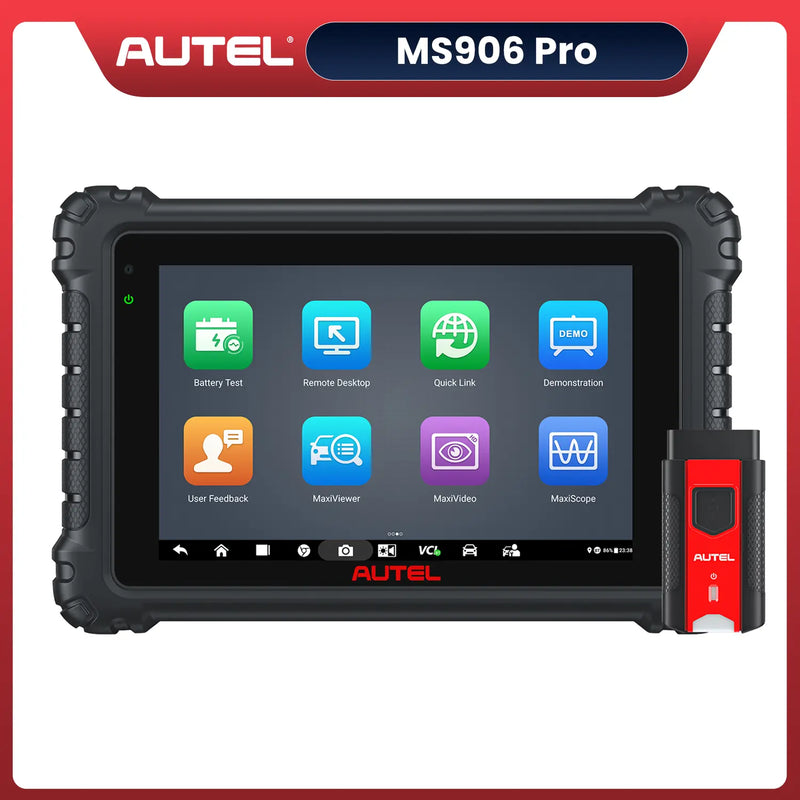
Autel MaxiSys MS906 Pro
$1499.00
2026 Autel Professional Diagnostic Scanner with Advanced ECU Coding, Bi-Directional Control & DoIP/CAN FD Support
Common Mistakes to Avoid
Do not replace the Bank 2 oxygen sensor simply because its signal indicates lean. First prove whether the exhaust is genuinely lean. On conventional narrowband systems, sensor switching can be compared between banks; wideband air-fuel sensors use different values and should be evaluated using manufacturer data.
Do not clean or replace the MAF without testing the pattern. A shared MAF problem normally influences both banks, while P0174 alone more often indicates a bank-specific fault.
Finally, do not assume that clearing the code fixed the car. Erasing codes also removes useful freeze-frame information and may reset learned values that were helping expose the problem.
For repair options after the failed system has been identified, OBDPRICE’s seven methods for fixing engine code P0174 provides a useful follow-up checklist.
Is the Autel MaxiSys MS906 Pro a Good Choice for P0174?
Yes—especially for repair shops, mobile technicians, and advanced DIY users who need more than a basic code reader. Its wireless interface lets you monitor live data from the engine bay, while graphing and recording make trim comparisons easier. Its bidirectional controls can also test supported purge valves, injectors, and other actuators.
Like all autel scanners, however, it does not replace service information or physical testing. It helps you choose the right test and evaluate the result.
The most reliable P0174 diagnosis follows a simple order: preserve the evidence, compare both banks, change engine speed, test the system indicated by the data, and verify the repair under the original conditions. Used this way, the Autel MaxiSys MS906 Pro does far more than read a code—it helps prevent the wrong part from being replaced.


